A Service Visit With A Defined Scope
Fire alarm maintenance should establish whether the system remains serviceable and whether changes to the building have affected its coverage. An engineer needs to understand the panel, devices, interfaces and previous faults. A maintenance visit should produce a record of what was inspected, tested and left outstanding.
Tell us whether you need a one-off service, help taking over an existing installation or a planned maintenance arrangement. Share the panel make, previous service report and any known access restrictions. This helps match the work to the equipment rather than assuming every commercial system can be maintained in the same way.
Routine Checks And Specialist Servicing
User checks and engineer servicing have different purposes. A routine user test helps confirm the alarm can be raised and heard, while a service visit involves a wider technical inspection. Staff should know the agreed procedure, how to record results and how to report a fault without masking it.
BS 5839-1:2025 covers maintenance of non-domestic fire alarm systems as well as design and installation. The service programme should be agreed with reference to that standard, the system documentation and the risk assessment. Government office and shop guidance identifies competent-person servicing at six-monthly intervals, with arrangements adjusted to the premises (GOV.UK, offices and shops guidance).
Understand Your Maintenance Duties
Article 17 of the Regulatory Reform (Fire Safety) Order 2005 addresses maintaining fire precautions in effective working order. Keeping a contract in a drawer does not establish that faults have been corrected. The responsible person needs a way to receive reports, prioritise defects and authorise the necessary work.
An inspection certificate should be read alongside its comments and exclusions. A service that could not access locked rooms or test a particular interface has limitations that need attention. Ask the contractor to identify those limitations clearly, and arrange any further access or specialist attendance needed to close them.
What The Engineer Needs To Check
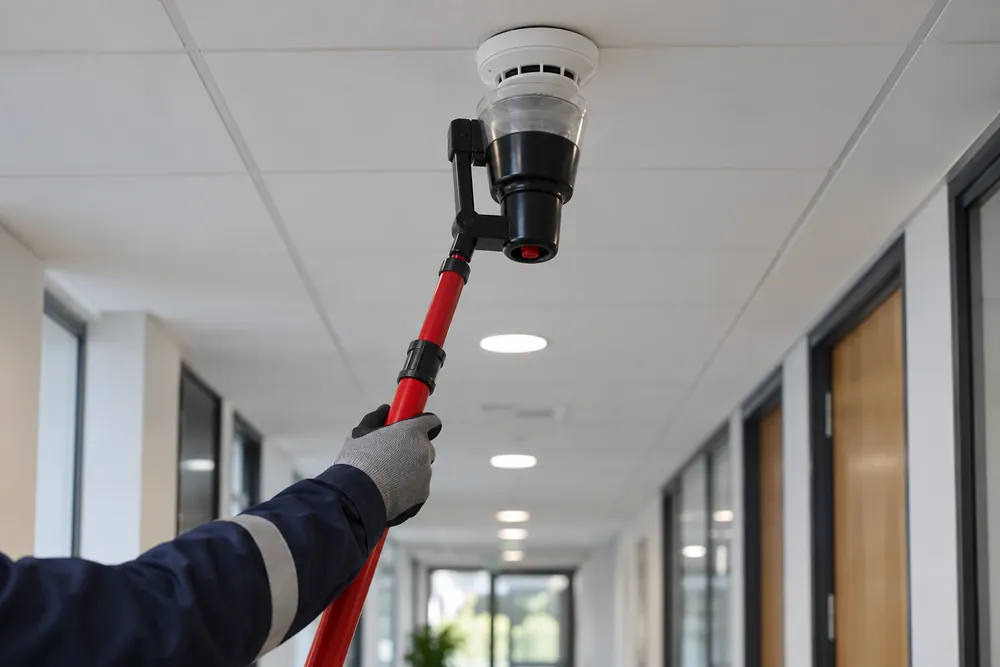
The visit should consider the control equipment, fault history, power supplies, batteries and the devices included in the agreed test programme. A visual review can identify damaged call points, obstructed detectors or changes in room use. The scope should explain how coverage is achieved across the maintenance cycle.
Connected functions need particular care. Door releases, remote signalling and plant shutdown interfaces may involve other contractors or a monitoring provider. Testing should be coordinated so an intended test does not trigger an unnecessary call-out, and all affected functions should be restored and checked before the visit is closed.
Recurring Faults And Unwanted Alarms
Repeated alarms can result from contamination, environmental conditions, unsuitable detector types or changes to normal activities. A record of the time, location and circumstances helps an engineer identify patterns. Resetting the panel repeatedly without investigating the cause can leave the underlying problem unresolved.
If a fault is active, follow your site's fire procedures and obtain competent advice on the effect on protection. Do not assume that silencing a buzzer restores the system. Any isolation or temporary measure should be authorised, documented and reviewed by the people responsible for safety at the premises.
Reports That Help You Manage The Site
A useful report identifies the equipment, date, test scope, defects and recommendations in plain language. It should distinguish an immediate concern from planned work and explain whether further diagnosis is needed. Keep the report with the logbook so the next engineer can see the history.
Where a repair is proposed, ask what caused the fault and how the replacement will be verified. Record completion against the original defect rather than keeping disconnected paperwork. When a landlord and tenant share responsibility, agree who receives the report and who can authorise work on the common system.
What Affects Maintenance Cost
The number of devices, system type, panel accessibility and interfaces influence the servicing scope. High ceilings, secure rooms, specialist test equipment and out-of-hours attendance can add time. A neglected system may require separate investigation or remedial work beyond the planned service.
When comparing quotations, check the number and scope of planned visits, what call-outs cover and how parts are charged. Mention whether drawings, device lists and previous certificates are available. A transparent maintenance proposal explains exclusions and escalation arrangements without implying that every future repair is included in a routine fee.